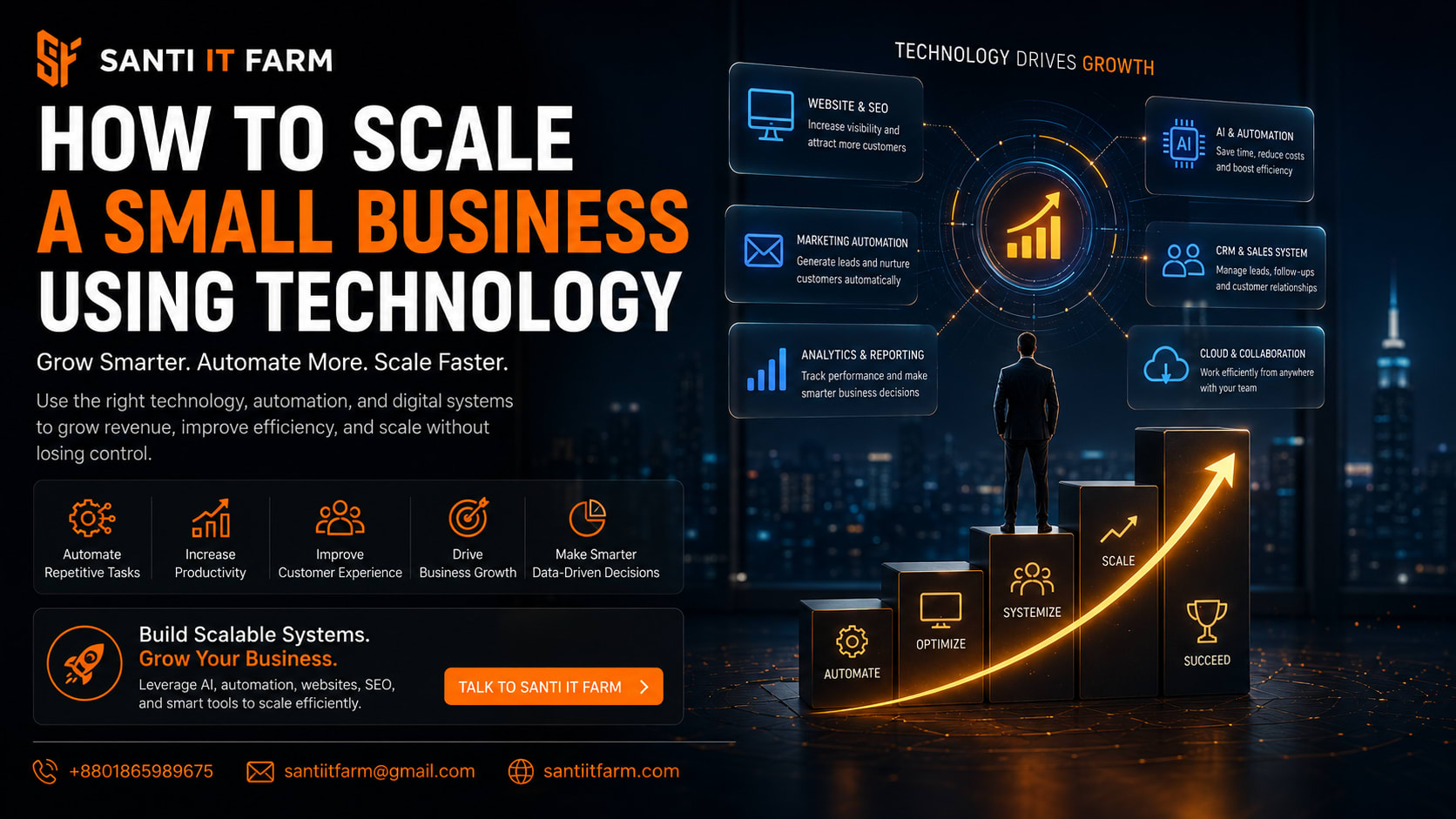
Why Most Small Businesses Struggle to Become Recognizable Brands
Many businesses start with passion, skill, and ambition. Very few successfully evolve into trusted brands that customers remember, recommend, and repeatedly buy from. The difference is rarely luck. It usually comes down to strategy, positioning, systems, and consistency.
In today’s highly competitive digital economy, small businesses in Bangladesh, India, Pakistan, the USA, UK, Canada, and Australia are competing in the same online marketplace. A local company is no longer competing only with nearby businesses. It is competing with global brands that invest heavily in customer experience, search visibility, automation, and brand trust.
Modern consumers are more informed than ever. Before making a purchase, they search Google, compare reviews, visit websites, check social media presence, and evaluate brand credibility. Businesses that fail to build a recognizable digital identity often struggle to scale, even if they offer excellent products or services.
The good news is that building a brand is no longer reserved for large corporations with massive budgets. With the right growth roadmap, small and medium-sized businesses can build authority, increase visibility, automate operations, and create long-term customer loyalty.
This guide breaks down the complete roadmap businesses can follow to move from survival mode to sustainable brand growth using practical digital strategies, SEO, customer-focused branding, automation, and scalable systems.
Quick Answer: How Does a Small Business Become a Brand?
- Develop a clear brand identity and positioning strategy
- Build a professional, conversion-focused website
- Invest in SEO and long-term organic visibility
- Create consistent branding across all digital platforms
- Focus heavily on customer trust and user experience
- Use automation to improve operational efficiency
- Leverage content marketing to establish authority
- Scale through data-driven marketing campaigns
- Build customer retention systems instead of relying only on new leads
- Continuously optimize products, services, and customer feedback
Businesses that combine branding, SEO, digital systems, customer experience, and automation typically grow faster and build stronger long-term market authority than businesses relying only on short-term advertising.
What Does It Mean to Grow From a Small Business Into a Brand?
A small business usually operates around products, services, or founder expertise. A brand goes much further. A brand creates recognition, emotional trust, authority, and consistent customer perception across every touchpoint.
When customers recognize a company name, associate it with reliability, and intentionally choose it over competitors, that business has moved beyond basic operations and entered brand territory.
Brand growth is not only about logos or visual identity. It includes customer experience, website quality, search visibility, service consistency, communication style, social proof, operational efficiency, and reputation management.
For example, two companies may offer similar web development services. One company simply sells websites. The other educates customers through valuable content, ranks on Google, responds quickly, showcases case studies, automates workflows, and provides exceptional user experiences. Over time, the second company becomes a recognizable authority brand.
This transformation requires strategic planning, long-term thinking, and consistent digital execution across marketing, technology, branding, and customer engagement.
Why Building a Brand Matters More Than Ever
- Strong brands reduce customer acquisition costs because trust increases conversion rates.
- Businesses with recognizable branding often charge higher prices without losing customers.
- SEO performance improves when businesses consistently publish authoritative, trustworthy content.
- Brand authority increases referral business and repeat customers.
- A professional digital presence improves investor, partnership, and corporate opportunities.
- Automation and scalable systems help businesses grow without operational chaos.
- Businesses with strong branding are more resilient during economic downturns.
- AI search engines and recommendation systems increasingly favor authoritative brands over unknown businesses.
- Customers are more likely to choose businesses with professional websites, reviews, and educational content.
- Global expansion becomes easier when brand trust already exists online.
In modern business environments, branding is no longer optional. It directly impacts visibility, trust, conversions, customer loyalty, and long-term profitability.
Key Benefits of Following a Structured Growth Roadmap
Improved Customer Trust
Businesses with strong branding, clear messaging, professional websites, and transparent communication build trust faster. Trust significantly influences purchase decisions in both local and international markets.
Higher Search Engine Visibility
SEO-focused growth strategies help businesses rank for commercial and informational keywords, bringing consistent organic traffic from Google and AI-powered search platforms.
Better Lead Generation
A strategic digital presence converts website visitors into qualified leads through optimized user experiences, strong CTAs, and authority-building content.
Scalable Operations
Business automation systems reduce repetitive tasks, improve efficiency, and allow companies to handle growth without increasing operational complexity.
Long-Term Competitive Advantage
Companies investing in branding, customer experience, and digital systems create sustainable advantages that competitors struggle to replicate quickly.
Increased Customer Retention
Strong brands create emotional loyalty. Loyal customers buy repeatedly, recommend services, and become long-term revenue drivers.
Global Market Reach
Digital-first businesses can attract international customers from regions like the USA, UK, Canada, Australia, India, and the Middle East without needing physical expansion.
Higher Conversion Rates
Professional UI/UX design, persuasive messaging, and trust signals significantly improve conversion performance across websites and marketing campaigns.
Realistic Business Growth Scenario
Before
- — A small e-commerce business relies only on Facebook posts for sales.
- — The company has no SEO strategy and receives minimal Google traffic.
- — Website speed is slow and mobile experience is poor.
- — Customer follow-up is inconsistent.
- — Brand visuals and messaging change frequently.
- — Most revenue depends on seasonal promotions and paid ads.
After
- The business launches a professionally optimized e-commerce website.
- SEO content targets high-intent customer searches.
- Brand identity becomes consistent across all platforms.
- Marketing automation improves lead nurturing and customer communication.
- Analytics reveal customer behavior and sales opportunities.
- Organic traffic steadily reduces dependency on expensive advertising.
- Customer reviews, case studies, and trust signals improve conversions.
- The company begins receiving inquiries from international customers.
This type of transformation is common when businesses shift from reactive marketing to structured long-term digital growth strategy.
Step-by-Step Growth Roadmap for Building a Recognizable Brand
Step 1: Clarify Brand Positioning
- › Define your unique value proposition.
- › Identify target customer pain points.
- › Understand competitor positioning.
- › Develop consistent brand messaging.
- › Create a professional visual identity.
Step 2: Build a High-Performance Website
- › Invest in responsive web design.
- › Improve website speed and security.
- › Create SEO-friendly site architecture.
- › Optimize conversion-focused landing pages.
- › Implement strong calls-to-action and lead forms.
Step 3: Develop an SEO Growth Strategy
- › Research high-intent commercial keywords.
- › Publish authoritative blog content regularly.
- › Optimize technical SEO and internal linking.
- › Improve local SEO visibility.
- › Target AI-search-friendly content structures.
Step 4: Create Authority Through Content
- › Publish educational business content.
- › Answer customer questions clearly.
- › Use case studies and success stories.
- › Create video and social content.
- › Build topical authority within your industry.
Step 5: Strengthen Customer Experience
- › Improve onboarding and communication.
- › Respond quickly to inquiries.
- › Simplify customer journeys.
- › Use UI/UX design to reduce friction.
- › Collect and implement customer feedback.
Step 6: Implement Business Automation
- › Automate lead capture and follow-up.
- › Use CRM systems for customer management.
- › Implement email marketing automation.
- › Automate repetitive operational tasks.
- › Use AI-powered systems for efficiency improvements.
Step 7: Scale Marketing Strategically
- › Run data-driven advertising campaigns.
- › Retarget website visitors effectively.
- › Expand into multi-channel marketing.
- › Track conversion analytics carefully.
- › Continuously optimize campaigns based on performance data.
Step 8: Focus on Retention and Loyalty
- › Build long-term customer relationships.
- › Offer post-sale support and value.
- › Develop referral programs.
- › Create loyalty-building experiences.
- › Maintain consistent brand communication.
Useful Tools and Platforms for Business Growth
The right technology stack depends on business size, industry, budget, and growth goals. Strategic implementation matters more than simply using many tools.
Common Mistakes That Prevent Small Businesses From Becoming Brands
- Focusing only on short-term sales instead of long-term brand authority
- Ignoring SEO and relying entirely on paid ads
- Using inconsistent branding across platforms
- Launching low-quality websites that reduce customer trust
- Failing to optimize for mobile users
- Neglecting customer experience and support
- Publishing generic content with no strategic value
- Avoiding automation and creating operational bottlenecks
- Ignoring analytics and performance data
- Trying to target everyone instead of a defined audience
- Underestimating the importance of trust signals and social proof
- Treating branding as only a logo design project
Frequently Asked Questions
Sustainable Growth Requires Strategy, Systems, and Brand Trust
Growing a small business into a trusted brand is not about chasing quick hacks or temporary trends. Sustainable growth happens when businesses combine branding, SEO, customer experience, technology, automation, and strategic marketing into one unified growth system.
Modern consumers expect professionalism, speed, transparency, and value. Businesses that invest in these areas build stronger trust, attract higher-quality customers, and create long-term competitive advantages.
Whether operating locally in Bangladesh, India, or Pakistan, or targeting international markets like the USA, UK, Canada, and Australia, businesses that prioritize digital transformation and brand authority position themselves for scalable growth.
The companies that dominate the next decade will not necessarily be the biggest businesses today. They will be the businesses that adapt faster, communicate better, optimize smarter, and consistently deliver value to their audiences.
Build a Brand That Customers Trust and Search Engines Recommend
Santi IT Farm helps businesses transform from small operations into scalable digital brands through strategic website development, SEO, branding, automation, UI/UX design, digital marketing, and growth-focused technology solutions.
Whether you are launching a startup, scaling an e-commerce business, modernizing your company website, or improving your digital growth strategy, our team develops practical systems designed for long-term business success.
We work with businesses across Bangladesh, India, Pakistan, the USA, UK, Canada, Australia, and global markets to create powerful digital foundations that increase visibility, conversions, and customer trust.
- Website Development
- Shopify Development
- WordPress Development
- SEO Services
- Digital Marketing
- Branding
- UI/UX Design
- Business Automation
- AI-powered Systems
- Custom Software Development
Ready to scale your business into a trusted brand? Contact Santi IT Farm today and start building a smarter digital growth strategy.
Get Started