Why Businesses That Operate in Silos Struggle to Scale
Many businesses invest in websites, social media, SEO, software tools, advertising, and automation platforms separately. But despite spending money on digital tools, growth often feels inconsistent, chaotic, and difficult to sustain.
The problem is rarely the tools themselves. The real issue is the lack of a connected digital ecosystem. When marketing, sales, customer support, operations, analytics, and automation systems are disconnected, businesses lose valuable data, waste time, create poor customer experiences, and struggle to scale efficiently.
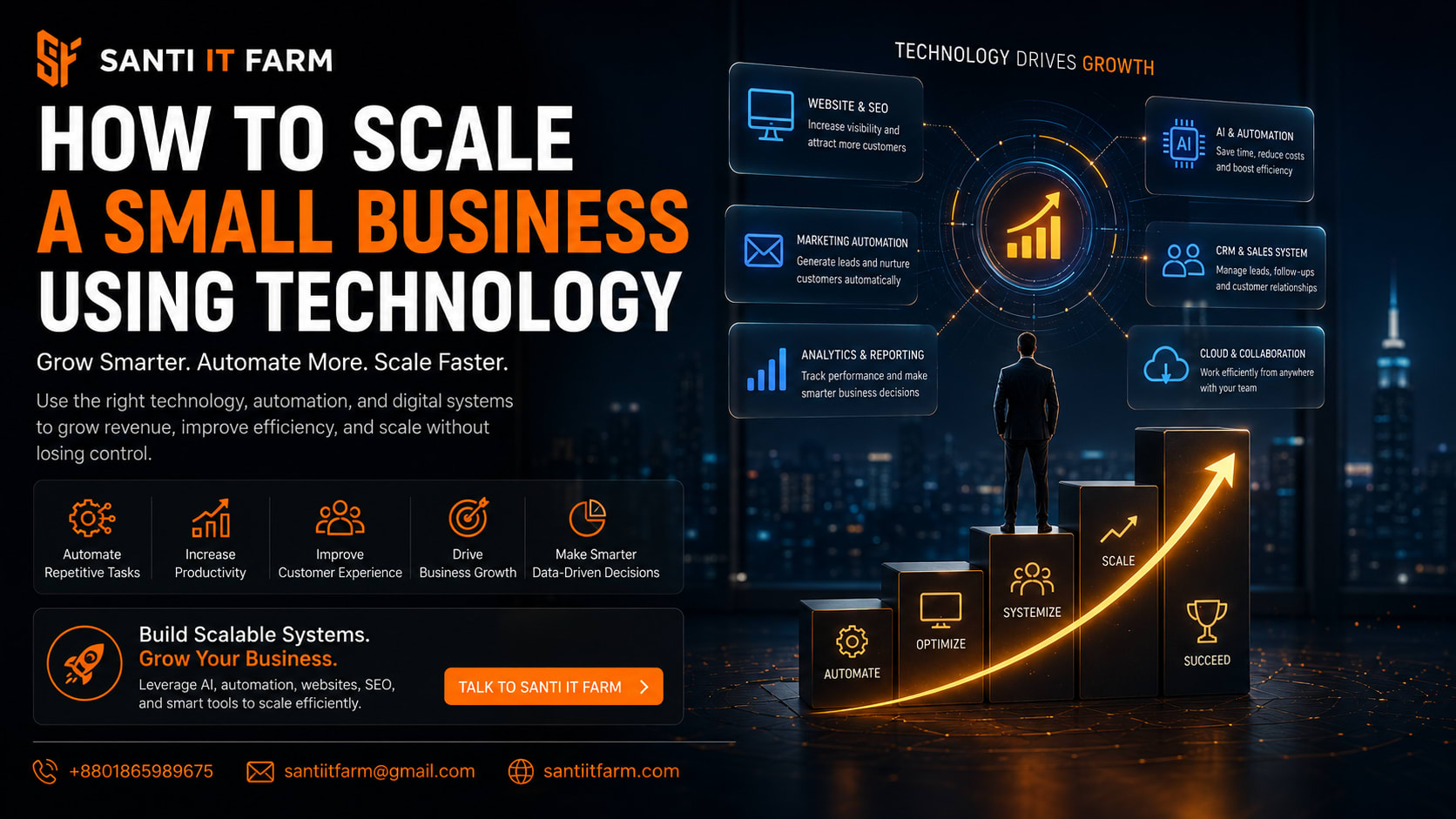
Today’s fastest-growing companies do not treat digital assets as isolated channels. They build ecosystems where websites, CRM systems, SEO, automation, analytics, content, advertising, social media, AI systems, and customer support all work together.
Whether you run a startup in Bangladesh, an e-commerce brand in India, a service business in Pakistan, or a scaling company targeting clients in the USA, UK, Canada, or Australia, building a strong digital ecosystem is now a competitive advantage — not a luxury.
A properly structured digital ecosystem helps businesses attract better leads, reduce operational friction, increase customer retention, automate repetitive tasks, improve brand trust, and create predictable long-term growth.
Quick Answer: What Is a Digital Ecosystem for Business?
- A digital ecosystem is a connected network of digital platforms, tools, people, data, and processes working together to support business growth.
- It usually includes a business website, CRM, SEO, digital marketing, automation systems, analytics, customer support, e-commerce systems, AI tools, and communication channels.
- The goal is to create a seamless customer experience while improving efficiency, scalability, data visibility, and profitability.
- A strong digital ecosystem helps businesses generate leads consistently, automate workflows, personalize customer journeys, and make smarter decisions using real-time data.
- Modern businesses use digital ecosystems to improve marketing ROI, customer retention, operational efficiency, and long-term scalability.
Businesses that integrate their systems strategically usually grow faster than businesses relying on disconnected tools and manual processes.
What Does a Digital Ecosystem Actually Mean?
A digital ecosystem is not just a collection of software subscriptions. It is a strategic infrastructure where every digital touchpoint supports a unified business objective.
Think of it as a connected business environment. Your website attracts visitors through SEO and advertising. Those visitors enter a CRM system. Marketing automation nurtures them through email sequences. Customer data feeds analytics dashboards. AI tools assist support teams. E-commerce systems manage purchases. Social media channels strengthen brand awareness. Everything communicates with everything else.
The most successful digital ecosystems are intentionally designed around customer behavior and business scalability.
For example, a Shopify-based e-commerce business may connect product pages, email marketing, abandoned cart recovery, customer analytics, inventory management, social media advertising, and AI-powered recommendation systems into one synchronized growth engine.
Similarly, a service-based business using WordPress may integrate SEO, lead capture forms, appointment booking systems, CRM pipelines, automation workflows, WhatsApp support, and content marketing into a seamless customer acquisition system.
A digital ecosystem becomes powerful when it removes friction for both customers and internal teams.
Why Building a Digital Ecosystem Matters More Than Ever
- Customers now interact with businesses across multiple channels before making decisions. A disconnected experience creates confusion and reduces trust.
- Businesses using integrated systems make faster decisions because their data is centralized and actionable.
- Automation reduces repetitive manual work, allowing teams to focus on growth and customer relationships.
- AI-powered systems are becoming essential for personalization, lead nurturing, support automation, and operational efficiency.
- SEO performance improves when content, technical optimization, UX, analytics, and conversion systems work together.
- A connected ecosystem improves customer retention because businesses can track and personalize the entire customer journey.
- Scaling becomes easier because systems are designed to handle growth without operational chaos.
- Modern buyers expect fast-loading websites, seamless checkout processes, instant communication, personalized recommendations, and omnichannel experiences.
- Businesses with fragmented systems often waste advertising budgets because they cannot properly track or optimize customer journeys.
- A strong ecosystem creates a competitive advantage that smaller or less organized competitors struggle to replicate.
Digital ecosystems are no longer reserved for large corporations. Small businesses, startups, agencies, and local brands can now build scalable digital infrastructures using affordable cloud-based platforms, automation tools, and AI technologies.
Key Benefits of Building a Digital Ecosystem
Better Customer Experience
Customers enjoy smoother interactions when websites, support channels, payment systems, and communication tools are connected. Faster response times and personalized experiences increase trust and conversions.
Higher Lead Conversion Rates
Integrated CRM and marketing systems help businesses nurture leads automatically with personalized messaging, follow-ups, and behavioral targeting.
Improved Operational Efficiency
Automation eliminates repetitive tasks like manual data entry, invoice tracking, lead assignment, reporting, and email follow-ups.
Stronger SEO and Content Performance
A connected ecosystem allows businesses to align content marketing, technical SEO, analytics, user experience, and conversion optimization more effectively.
Data-Driven Decision Making
Businesses gain visibility into customer behavior, campaign performance, sales funnels, and operational bottlenecks using centralized analytics.
Scalable Business Growth
Digital ecosystems make it easier to scale operations, manage larger customer volumes, and launch new products or services efficiently.
Increased Customer Retention
Businesses can maintain ongoing engagement through automation, loyalty systems, personalized communication, and proactive support.
Reduced Marketing Waste
Integrated tracking and attribution systems help identify which channels generate real revenue instead of vanity metrics.
Realistic Business Transformation Example
Before
- — A local fashion e-commerce store relied only on Facebook ads and manual WhatsApp orders.
- — Customer data was not organized.
- — The website was slow and poorly optimized for SEO.
- — No email marketing or abandoned cart recovery existed.
- — Inventory management was inconsistent.
- — Customer support responses were delayed.
- — Sales fluctuated unpredictably every month.
After
- A Shopify-based ecosystem was implemented with CRM integration, automation, analytics, SEO optimization, and email workflows.
- Customer inquiries were automatically routed through integrated support systems.
- Abandoned cart automation recovered lost sales.
- SEO-driven content generated organic traffic consistently.
- Analytics dashboards identified high-converting products and campaigns.
- Inventory systems synchronized with customer orders.
- AI-powered marketing segmentation improved repeat purchase rates.
- The business achieved more stable monthly revenue and reduced operational stress.
This type of transformation is increasingly common among modern businesses in Bangladesh, India, Pakistan, and global e-commerce markets that prioritize long-term scalability instead of short-term tactics.
Step-by-Step Process to Build a Powerful Digital Ecosystem
Define Your Business Growth Goals
- › Clarify whether your primary focus is lead generation, e-commerce sales, customer retention, automation, or operational efficiency.
- › Identify your ideal customer journey from discovery to long-term retention.
- › Set measurable KPIs like conversion rates, customer acquisition cost, lifetime value, and organic traffic growth.
Build a High-Performance Website Foundation
- › Your website should serve as the central hub of the ecosystem.
- › Invest in fast-loading, mobile-optimized, SEO-friendly website architecture.
- › Use scalable platforms like WordPress, Shopify, or custom development depending on your business model.
- › Prioritize UX design, trust signals, clear CTAs, and conversion optimization.
Implement a CRM System
- › Centralize customer data using a CRM platform.
- › Track leads, customer interactions, sales pipelines, and follow-up activities.
- › Integrate forms, chat systems, email marketing, and support tools into the CRM.
Integrate SEO and Content Marketing
- › Create high-quality content targeting commercial, informational, and transactional search intent.
- › Use semantic SEO strategies instead of outdated keyword stuffing.
- › Build topical authority around your services and industry.
- › Optimize for featured snippets, AI search engines, and voice search queries.
Automate Repetitive Processes
- › Use automation tools for email sequences, lead nurturing, onboarding, support tickets, invoicing, and reporting.
- › Reduce manual work to improve efficiency and scalability.
- › Ensure automation enhances customer experience instead of making communication feel robotic.
Connect Analytics and Reporting Systems
- › Track user behavior, traffic sources, sales performance, and funnel drop-offs.
- › Use centralized dashboards for better visibility.
- › Monitor ROI across SEO, advertising, content, and social media campaigns.
Leverage AI Strategically
- › Use AI tools for customer support, content assistance, predictive analytics, personalization, and workflow automation.
- › Avoid relying entirely on AI-generated content without human expertise and strategy.
- › Combine AI efficiency with human creativity and business understanding.
Create Omnichannel Customer Experiences
- › Ensure consistency across websites, email, social media, advertising, messaging apps, and customer support.
- › Customers should feel connected to one unified brand experience regardless of platform.
- › Use customer data to personalize communication across channels.
Focus on Security and Scalability
- › Protect customer data using secure hosting, SSL certificates, backups, and cybersecurity best practices.
- › Choose scalable infrastructure that can handle future growth.
- › Regularly update systems, plugins, APIs, and integrations.
Continuously Optimize and Evolve
- › Digital ecosystems are never truly finished.
- › Review analytics regularly to identify weaknesses and opportunities.
- › Adapt to changing customer behavior, search trends, and technology innovations.
- › Continuously improve UX, SEO, automation, and conversion performance.
Useful Tools for Building a Modern Digital Ecosystem
The best ecosystem is not built using the most expensive tools. It is built using the right integrations, workflows, strategy, and customer-focused execution.
Common Mistakes Businesses Make When Building Digital Ecosystems
- Buying too many disconnected software tools without a clear strategy.
- Ignoring customer experience while focusing only on automation.
- Building websites that look attractive but fail to convert visitors.
- Neglecting SEO until after the website launch.
- Failing to centralize customer data.
- Overcomplicating workflows with unnecessary technology.
- Relying entirely on paid advertising without building organic visibility.
- Using AI-generated content without human editing or strategic oversight.
- Ignoring analytics and making decisions based on assumptions.
- Failing to invest in scalable infrastructure and cybersecurity.
- Treating digital transformation as a one-time project instead of an ongoing process.
Frequently Asked Questions
The Future of Business Growth Is Connected
Businesses no longer compete only on products or pricing. They compete on experience, speed, personalization, efficiency, and digital capability.
A well-designed digital ecosystem helps businesses operate smarter, scale faster, and create stronger relationships with customers. It transforms scattered digital activities into a unified growth engine.
Whether you are launching a startup, scaling an e-commerce brand, modernizing a traditional business, or expanding into international markets, investing in a connected digital ecosystem can dramatically improve long-term business performance.
The companies that win in the coming years will be the ones that integrate technology, automation, data, SEO, AI, and customer experience strategically — not randomly.
Building a digital ecosystem is not just about technology. It is about creating a scalable business infrastructure designed for sustainable growth.
Build a Scalable Digital Ecosystem With Santi IT Farm
At Santi IT Farm, we help businesses transform fragmented digital operations into powerful growth ecosystems.
Our team combines strategy, SEO, development, automation, branding, UI/UX design, and AI-powered systems to create scalable digital infrastructures tailored to real business goals.
Whether you need a high-converting website, Shopify store, WordPress platform, SEO growth strategy, automation workflow, or complete digital transformation roadmap, our experts can help you build a future-ready business ecosystem.
- Website Development
- Shopify Development
- WordPress Development
- SEO Services
- UI/UX Design
- Digital Marketing
- Business Automation
- AI-powered Systems
- Custom Software Development
- Branding & Growth Strategy
Ready to scale smarter with a connected digital ecosystem? Contact Santi IT Farm today and start building a stronger digital future for your business.
Get Started