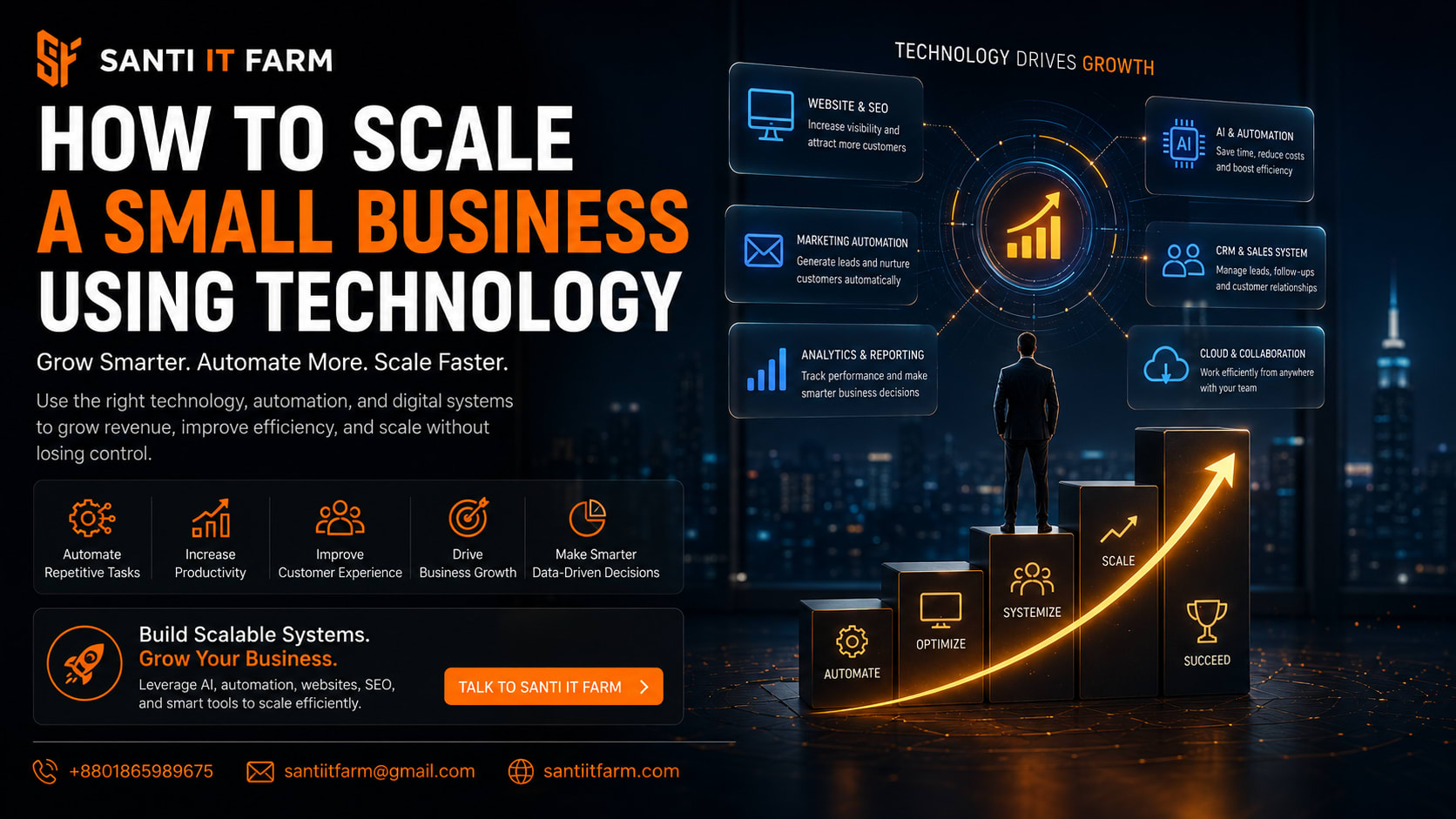
Why Most Businesses Struggle to Scale Long-Term
Many businesses experience short bursts of success but fail to sustain growth over the long run. Revenue spikes from paid advertising, seasonal demand, or viral social media campaigns often create the illusion of stability. However, without a structured long-term business growth strategy, companies eventually face inconsistent sales, operational bottlenecks, customer churn, and rising acquisition costs.
In today’s competitive digital economy, sustainable business growth requires far more than just selling a good product or service. Companies need a clear roadmap that aligns branding, customer experience, marketing, technology, operations, automation, and long-term market positioning.
Whether you run a startup in Bangladesh, an eCommerce brand in India, a SaaS company in the USA, or a service-based business in the UK or Australia, the core growth principles remain the same. Businesses that scale successfully focus on systems, customer trust, operational efficiency, and data-driven decision-making.
Modern consumers are also more informed than ever. They compare brands, read reviews, evaluate credibility, and often interact with businesses across multiple channels before making a purchase decision. That means businesses need a growth strategy that creates consistency across digital experiences, customer communication, and service delivery.
At Santi IT Farm, we have seen businesses transform when they stop chasing short-term wins and start investing in scalable growth foundations. The companies that thrive over time are the ones that think strategically, adapt quickly, and build systems designed for sustainable expansion.
Quick Answer: How to Build a Long-Term Business Growth Strategy
- Define a clear long-term business vision and measurable growth goals.
- Identify your ideal target audience and market positioning.
- Build a strong brand identity that creates trust and recognition.
- Invest in scalable digital infrastructure such as websites, CRM systems, and automation.
- Focus on customer retention, not just customer acquisition.
- Create a consistent SEO and content marketing strategy.
- Use data analytics to track growth opportunities and operational gaps.
- Develop multiple revenue channels to reduce business risk.
- Improve operational efficiency with automation and streamlined workflows.
- Continuously adapt based on customer behavior, market trends, and technology changes.
Long-term business growth comes from building repeatable systems, strong customer relationships, scalable operations, and a recognizable brand presence over time.
What Is a Long-Term Business Growth Strategy?
A long-term business growth strategy is a structured plan designed to help a company achieve sustainable expansion over multiple years rather than focusing only on short-term revenue gains. It combines marketing, branding, customer experience, technology, operations, financial planning, and scalability into one unified direction.
Unlike short-term marketing tactics, a long-term strategy focuses on building durable competitive advantages. This includes strengthening customer loyalty, improving operational systems, expanding market reach, and creating predictable revenue streams.
A strong growth strategy also helps businesses make smarter decisions. Instead of reacting emotionally to every market shift or competitor move, companies operate with a clear framework for evaluating opportunities and risks.
For example, an eCommerce business that depends only on paid ads may struggle when advertising costs increase. But a business with SEO traffic, email marketing systems, brand loyalty, repeat customers, automation, and diversified acquisition channels becomes more resilient and profitable over time.
In many developing business markets such as Bangladesh, Pakistan, and India, businesses often focus heavily on immediate sales without investing in digital infrastructure, branding, or long-term customer retention. This creates unstable growth patterns. Companies that invest early in scalable systems usually outperform competitors in the long run.
A sustainable growth strategy is ultimately about creating a business that can grow without chaos. It helps companies scale operations, increase profitability, improve customer satisfaction, and adapt to changing market conditions with confidence.
Why a Long-Term Growth Strategy Matters More Than Ever
- Customer acquisition costs are rising across Google Ads, Meta Ads, and other digital channels, making retention and organic growth increasingly important.
- Businesses without strategic systems often struggle with inconsistent revenue and operational inefficiencies.
- Strong branding and digital authority improve trust, especially in international markets where credibility directly impacts conversions.
- AI-powered search engines and modern SEO reward businesses that produce authoritative, experience-driven content.
- Scalable websites, automation systems, and CRM integrations improve operational efficiency and reduce manual workload.
- Long-term planning helps businesses survive economic downturns and market competition more effectively.
- Companies with diversified marketing channels are less vulnerable to platform algorithm changes.
- A growth strategy creates better alignment between leadership, marketing, sales, customer support, and operations.
- Businesses with measurable KPIs can identify growth opportunities faster and make data-driven decisions.
- Modern consumers expect seamless digital experiences, fast websites, strong communication, and consistent service quality.
Long-term growth is no longer optional for businesses that want to remain competitive. In a rapidly evolving digital market, sustainable scaling requires strategy, technology, customer trust, and continuous optimization.
Key Benefits of Building a Sustainable Business Growth Strategy
Predictable Revenue Growth
Businesses with structured growth systems generate more stable revenue over time because they rely on multiple acquisition and retention channels rather than temporary trends.
Stronger Brand Authority
A consistent digital presence, quality branding, and authoritative content help businesses become trusted industry leaders in both local and global markets.
Better Customer Retention
Retaining existing customers is often far more profitable than constantly acquiring new ones. A strong strategy improves customer satisfaction and loyalty.
Scalable Operations
Well-designed systems, automation, and streamlined workflows allow businesses to grow without creating operational chaos or excessive manual work.
Improved Marketing ROI
Strategic SEO, content marketing, and conversion optimization reduce dependence on expensive paid advertising over time.
Higher Competitive Advantage
Businesses that continuously improve their digital infrastructure, customer experience, and brand positioning outperform slower competitors.
Better Decision-Making
Growth strategies supported by analytics and KPIs help leaders make smarter business decisions based on real performance data.
Global Market Expansion
Digital-first growth strategies enable businesses from Bangladesh, India, and Pakistan to compete internationally and attract clients from the USA, UK, Canada, and Australia.
Realistic Business Growth Example
Before
- — A growing eCommerce brand relied entirely on Facebook Ads for sales.
- — The company had no SEO strategy, weak branding, and poor customer retention.
- — Website performance was slow, causing high bounce rates and abandoned carts.
- — Customer communication was inconsistent and mostly manual.
- — Revenue fluctuated heavily based on ad spending.
After
- The business redesigned its website with conversion-focused UI/UX improvements.
- SEO content and product optimization increased organic search traffic.
- Email automation improved customer retention and repeat purchases.
- CRM systems streamlined customer communication and lead management.
- Brand identity improvements increased trust and social proof.
- Business automation reduced manual tasks and improved operational efficiency.
- Revenue became more stable through diversified acquisition channels.
This type of transformation is common when businesses shift from reactive marketing to strategic long-term growth planning.
Step-by-Step Process to Build a Long-Term Business Growth Strategy
Define Clear Business Goals
- › Set realistic long-term revenue and growth targets.
- › Identify your desired market position within the next 3–5 years.
- › Align business objectives with operational capacity and resources.
- › Create measurable KPIs such as customer acquisition cost, retention rate, and conversion rate.
Understand Your Target Audience
- › Research customer pain points, buying behaviors, and decision-making triggers.
- › Segment audiences based on demographics, interests, and purchasing intent.
- › Use surveys, analytics, and customer feedback to improve market understanding.
- › Focus on solving real customer problems instead of selling generic services.
Strengthen Your Brand Positioning
- › Develop a clear brand voice and visual identity.
- › Build trust through professional web design, testimonials, and case studies.
- › Create consistent messaging across websites, social media, and marketing channels.
- › Position your business around expertise and measurable outcomes.
Build a High-Performance Website
- › Ensure your website is fast, mobile-friendly, secure, and conversion-focused.
- › Optimize navigation and user experience for better engagement.
- › Integrate lead forms, chat systems, and analytics tools.
- › Use SEO-friendly architecture to improve search visibility.
Invest in SEO and Content Marketing
- › Create authoritative blog content targeting informational and commercial keywords.
- › Optimize pages for Google and AI-powered search engines.
- › Use semantic SEO strategies and topic clusters.
- › Publish content that answers customer questions clearly and naturally.
Create Scalable Marketing Systems
- › Build email marketing funnels and automation workflows.
- › Use CRM systems to manage leads and customer relationships.
- › Develop omnichannel marketing strategies across search, social, and email.
- › Reduce dependency on a single traffic source.
Focus on Customer Retention
- › Improve onboarding experiences and customer support.
- › Implement loyalty programs and personalized communication.
- › Track customer satisfaction and feedback regularly.
- › Encourage repeat business through value-driven relationships.
Leverage Business Automation
- › Automate repetitive administrative and marketing tasks.
- › Use AI-powered tools for customer support, lead scoring, and analytics.
- › Improve operational efficiency with workflow systems.
- › Reduce human error and save time through process optimization.
Analyze Data and Optimize Continuously
- › Monitor analytics, conversions, and customer behavior.
- › Identify bottlenecks and underperforming channels.
- › Test landing pages, offers, and marketing campaigns.
- › Adapt strategies based on real market performance and customer trends.
Prepare for Scalable Expansion
- › Build systems that can support future growth without operational breakdowns.
- › Document processes and workflows for team scalability.
- › Explore international market opportunities strategically.
- › Invest in technology and infrastructure before growth bottlenecks occur.
Useful Tools for Long-Term Business Growth
The right tools alone do not guarantee growth. Businesses achieve better results when technology is combined with strategic planning, execution, and ongoing optimization.
Common Mistakes Businesses Make When Trying to Scale
- Focusing only on short-term sales instead of sustainable growth systems.
- Relying entirely on paid advertising without building organic traffic.
- Ignoring customer retention and loyalty strategies.
- Using outdated websites with poor user experience.
- Scaling operations without proper automation or workflows.
- Failing to track analytics and performance data.
- Inconsistent branding across digital platforms.
- Targeting overly broad audiences without clear positioning.
- Neglecting SEO and content authority building.
- Avoiding technology upgrades until operational problems become severe.
- Expanding too quickly without scalable systems.
- Treating digital marketing as an expense instead of a growth investment.
Frequently Asked Questions
Building a Business That Grows Beyond Short-Term Success
Sustainable business growth does not happen through luck, random marketing tactics, or temporary trends. It happens when businesses intentionally build strong foundations, scalable systems, customer trust, and operational efficiency over time.
The companies that dominate their markets are rarely the ones chasing quick wins every month. Instead, they invest consistently in branding, technology, SEO, automation, customer experience, and strategic planning. They understand that long-term growth requires patience, adaptability, and smart execution.
In an increasingly digital and AI-driven world, businesses that ignore long-term strategy risk falling behind competitors who embrace innovation and scalability. Modern consumers expect professionalism, speed, trust, and seamless digital experiences. Businesses that deliver these consistently create stronger market positions and sustainable profitability.
Whether you are running a startup in South Asia or scaling an international brand across the USA, UK, Canada, or Australia, the principles remain the same: focus on value creation, build scalable systems, strengthen customer relationships, and continuously optimize your operations.
Long-term growth is not just about increasing revenue. It is about building a resilient business that can adapt, evolve, and thrive in changing markets for years to come.
Ready to Build a Scalable Growth Strategy for Your Business?
At Santi IT Farm, we help businesses build powerful digital growth systems designed for long-term success. From strategic website development and SEO to automation, branding, eCommerce solutions, and AI-powered business systems, our team focuses on scalable results that support sustainable growth.
Whether you are a startup, local business, eCommerce company, or global brand, we create customized strategies tailored to your goals, market, and growth challenges.
Our approach combines technical expertise, business strategy, conversion optimization, SEO intelligence, and modern digital infrastructure to help businesses compete confidently in today’s evolving online marketplace.
- Website Development
- Shopify Development
- WordPress Development
- SEO Services
- Digital Marketing
- Branding & UI/UX Design
- Business Automation
- AI-powered Systems
- Custom Software Development
- E-commerce Solutions
Partner with Santi IT Farm and build a smarter, stronger, and more scalable future for your business.
Get Started