Introduction
Most startups don't fail because of bad ideas—they fail because of poor execution. And one of the biggest silent killers? Bad website decisions.
You invest money. You launch a website. But it doesn't generate leads, sales, or trust.
Instead of being an asset, your website becomes a money drain.
In this guide, you'll learn exactly how startups waste money on bad website decisions, why it matters more than ever in 2026, and how to fix it with a conversion-focused approach.
Quick Answer
- Startups waste money by choosing cheap, non-strategic website solutions
- Poor UX and slow performance kill conversions and ROI
- Lack of SEO and marketing integration makes websites invisible
- DIY or inexperienced developers often lead to costly redesigns
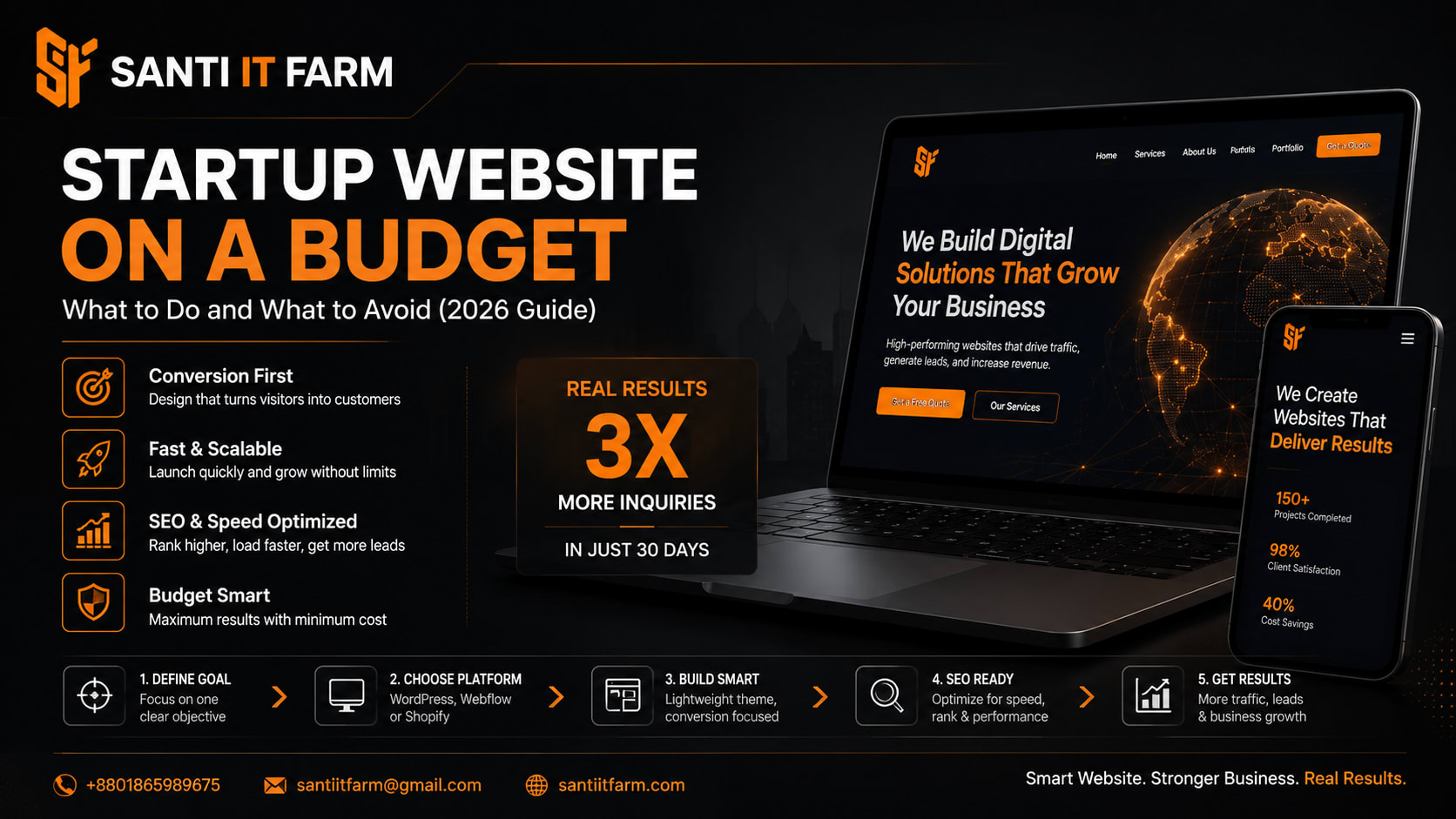
- A conversion-focused website strategy saves money and drives growth
What is "How Startups Waste Money on Bad Website Decisions"?
It refers to common mistakes startups make when building or managing their website, leading to: wasted budget, low conversions, poor user experience, and zero ROI.
Instead of treating a website as a business growth tool, many treat it as a one-time design project—and that's where things go wrong.
Why It Matters in 2026
- In 2026, your website is no longer optional—it's your primary sales engine.
- Customers research online before buying.
- Google prioritizes fast, user-friendly websites.
- AI tools extract and recommend high-quality, structured content.
- Competition is higher than ever.
- A poorly built website doesn't just underperform—it actively loses you money every day.
A poorly built website doesn't just underperform—it actively loses you money every day.
Key Benefits of Making the Right Website Decisions
Higher Conversion Rates
More leads and sales without extra ad spend.
Lower Customer Acquisition Cost
Better ROI on marketing.
Stronger Brand Trust
Professional look builds credibility.
Scalable Growth
Website supports long-term business expansion.
24/7 Sales System
Works even when you're offline.
Real Business Use Case
Before
- — A startup eCommerce brand invested $300 in a cheap website.
- — Problems:
- — Slow loading speed (5+ seconds)
- — No mobile optimization
- — No SEO structure
- — Confusing checkout process
- — Result: High bounce rate (80%+)
- — Almost zero sales
After
- They later rebuilt the site with a conversion-focused strategy:
- Optimized UI/UX
- Fast loading speed
- SEO-ready structure
- Clear call-to-actions
- Outcome within 60 days:
- 3X increase in conversions
- 50% reduction in bounce rate
- Consistent daily sales
Same business. Same product. Only the website changed.
Step-by-Step Implementation Guide
Step 1: Define Business Goals First
- › Before design, ask: Do you want leads, sales, bookings, or brand awareness?
Step 2: Choose Strategy Over Cheap Pricing
- › Avoid: $50 templates with no customization, freelancers without business understanding.
- › Focus on: Conversion-focused design, business-driven structure.
Step 3: Build a Conversion-Focused Structure
- › Your website must include:
- › Clear headline (what you offer)
- › Strong CTA (call-to-action)
- › Trust elements (reviews, testimonials)
- › Simple navigation
Step 4: Optimize for Speed & Mobile
- › Load time under 2 seconds
- › Fully responsive design
- › Optimized images and code
Step 5: Integrate SEO from Day One
- › Keyword-optimized pages
- › Proper heading structure
- › Technical SEO setup
Step 6: Connect Marketing Tools
- › Google Analytics
- › Facebook Pixel
- › CRM integration
Step 7: Continuous Improvement
- › Track user behavior
- › A/B test landing pages
- › Improve based on data
Tools & Technologies
Professional websites rely on the right tools.
Common Mistakes to Avoid
Choosing Cheap Over Effective
Low-cost websites often lead to high long-term losses.
Ignoring User Experience (UX)
Confusing layouts = lost customers.
No SEO Strategy
If people can't find you, your website is useless.
Slow Loading Speed
Every extra second reduces conversions.
No Clear CTA
Visitors don't know what to do next.
One-Time Development Mindset
Websites need continuous improvement—not 'set and forget.'
Hiring the Wrong Team
Developers without marketing knowledge build pretty but useless websites.
FAQ Section
Conclusion
Bad website decisions don't just waste money—they limit your growth, damage your brand, and kill opportunities.
In 2026, your website must be: strategic, conversion-focused, SEO-optimized, and performance-driven.
Anything less is a liability.
CTA: Turn Your Website Into a Revenue Machine
If your current website isn't generating leads or sales, it's time to fix it.
Santi IT Farm specializes in:
We don't just build websites—we build business growth engines.
Visit santiitfarm.com
Book a consultation today
Let's turn your website into your most powerful sales asset.
- Conversion-focused website design
- Startup-friendly solutions
- SEO-optimized development
- High-performance, scalable systems
Stop wasting money. Start building results.
Get Started